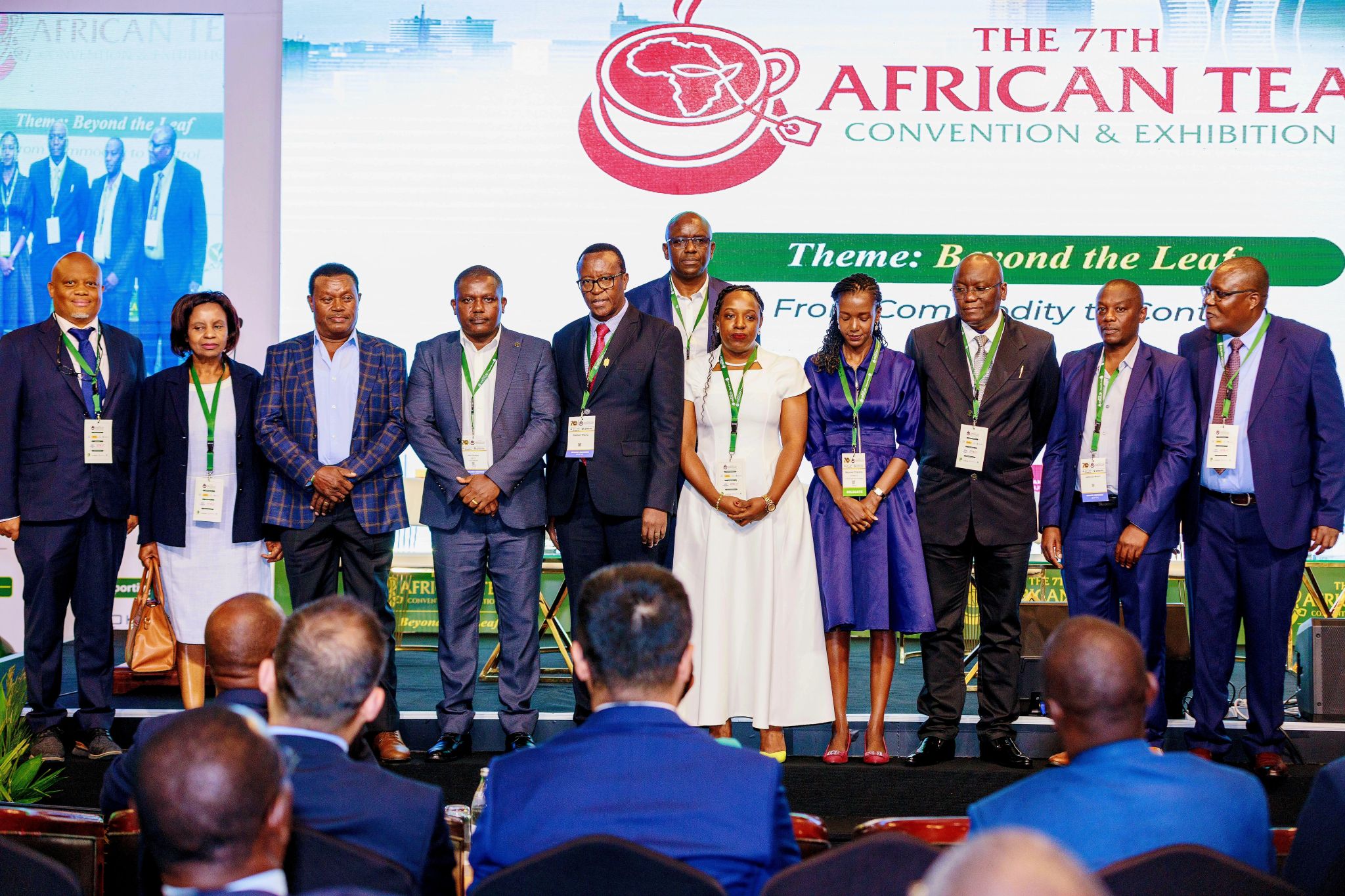
After months of meticulous planning, the 7th African Tea Convention 2026, in Nairobi has officially delivered.
As a member of the Steering Committee, pride filled my heart as I watched it unfold: exceptional organization, high-level dialogue, and a full house of global tea leaders.
Beyond that, I was honored to moderate Session1:
Challenging the Commodity Mindset.
The strategic question guiding our opening panel was simple yet profound: Should African producers remain within auction-driven price discovery, or actively transition to alternative trade models?
My panel was tasked to resolve two critical trade-offs:
- Liquidity vs. Margin Expansion
- System Stability vs. Experimentation Risk
The debate was grounded on three world-class presentations:
Wesley Bosuben
Fom Origin to Market: Addressing Bulk Tea Export Challenges. Are we exporting tea, or exporting value?
- The Reality Check: The traditional chain (Leaf → Factory → Auction → Port → Global Market) moves volume, not value.
- The Retained Value: Farmer (8%) + Factory (10%) = 18% retained at origin vs. Brand Owner (22%) downstream.
- The Future: Not producing more tonnes but More Value, More Innovation, More Market Access, More Differentiation, and More Value Retained at Origin.
Niraj de Mel.
The Future of the Global Tea Industry!
- Auctions handle liquidity, comparison, and rapid clearance well, but they cannot capture provenance, the sustainability story, or buyer-specific manufacture.
- The Solution: Position producers as a portfolio (Bulk Input + Differentiated Orthodox + Specialty + Functional Ingredients). Protect the premium, prove the value, and match volume with demand.
Dan Bolton
From Auctions to Intelligent Trade Networks
- Value is built before it is priced. Price discovery reveals price; it does not create value. Ai makes information abundant, but trust remains scarce. Countries are administrative; tea markets are relational."
- Auctions serve as the liquidity engine, while Direct Trade acts as the premium channel for identity. Hybrid Systems bridge the two.
- The Takeaway: Hybrid Trade is not merely a digital screen. It is the trust infrastructure around the transaction—spanning Buyer Access, Customs, Escrow, Traceability, Payments, Financing, Logistics, and Storytelling.
A note for all:
- The auction remains our efficient liquidity engine, as we saw when a unilateral minimum price directive previously disrupted liquidity and left aging stock in warehouses. However, liquidity without value creation is a race to the bottom.
- We must intentionally move toward a hybrid, intelligent, pan-African network that supports our existing markets while strategically building the infrastructure for the future.
- Thank you to EATTA, my fellow steering committee members, my exceptional panelist: Wesley, Niraj, Dan, and every delegate who leaned into this vital debate.
SRC:
https://www.linkedin.com/posts/victoria-ashabahebwa-37a2a385_africanteaconvention-eatta-uta-activity-7507512682930065408-YueN/?rcm=ACoAABIEqE4Bg_yM-BR6VkBfR0UTRiO205stvwI