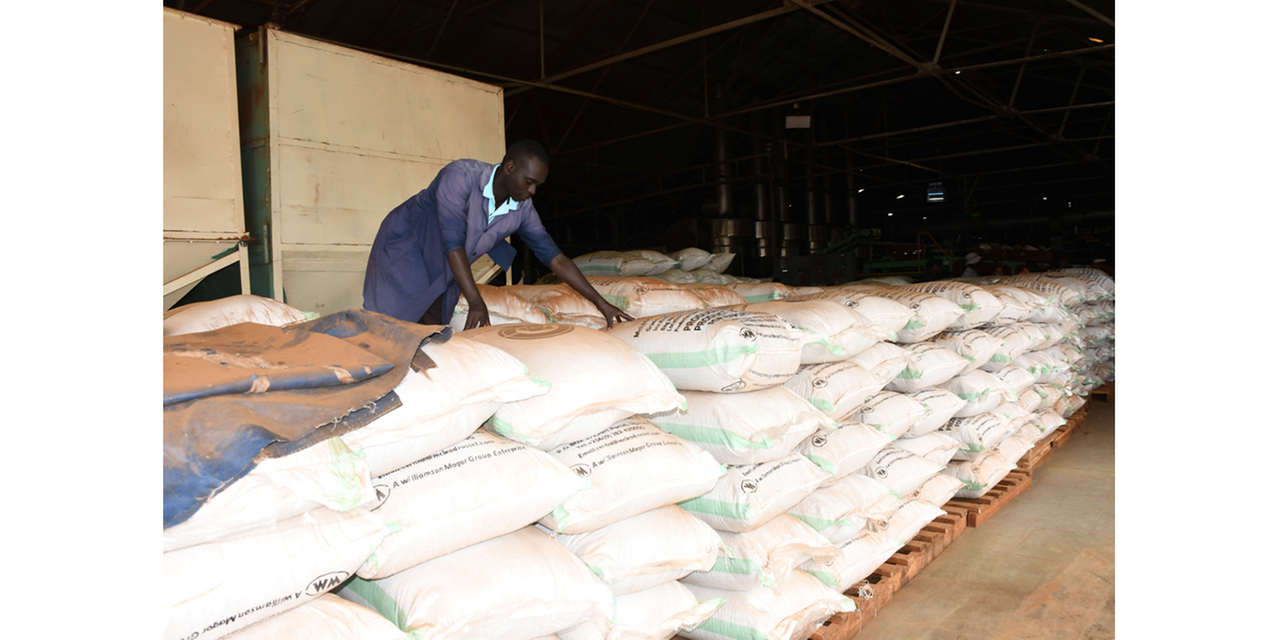
Farmers push for reforms to boost tea production
What you need to know:
- Farmers are now pushing for broader reforms, including the development of industry regulations, improved logistics, and mechanisation
The Uganda Tea Association (UTA) has announced a renewed push for reforms and sustainability measures aimed at reviving the country’s tea industry following years of market volatility and declining production.
Speaking during the association’s first-ever industry retreat on Friday in Fort Portal City, the UTA Chairperson, Ashabaahebwa Victoria, said the sector is beginning to recover after suffering major shocks triggered by global conflicts, including the Russia-Ukraine war and instability in the Middle East.
“These disruptions caused a sharp decline in tea prices, affecting cash flow across the entire value chain. We have seen factories close and reopen, downsizing operations, and production dropping from over 60 million kilograms to about 40 million kilograms annually,” she said.
Uganda’s tea prices also plummeted to as low as $0.50 per kilogram at the peak of the crisis, further straining producers and farmers.
She said in response to the challenges, UTA engaged the government in 2023 with a series of short, medium, and long-term proposals to stabilize the sector, and a key recommendation was the provision of working capital support equivalent to 30 percent of industry needs to enable factories to purchase green leaf from farmers.
“The entire system is interconnected. When factories cannot pay farmers, farmers cannot invest in fertilizers or quality inputs, and the entire value chain suffers. Following engagements with government and stakeholders, including the East African Tea Trade Association, President Yoweri Museveni pledged Shs152 billion in support for working capital, along with fertilizer subsidies for farmers,” she said.
She said they now want the government to fast-track the release of Shs152 billion in working capital support, warning that continued delays could deepen the crisis facing the country’s tea industry.
She added that, for years, market access has remained a major challenge for Uganda’s tea industry, which largely relies on bulk exports through the auction system. However, she said this time they plan to shift strategy and establish direct connections with buyers in key international markets.
As part of efforts to address this, the UTA has engaged strategic partners to support industry growth, including Diamond Trust Bank, which also serves as a banker to the East African Tea Trade Association, saying they are working closely with the bank to develop tailored financial products that can enhance profitability for tea producers across member countries.
Mr. Kaziro Kyambadde, the head of Corporate Institute Business Banking at DTB, said their partnership with the association is to ensure that all people in the tea industry get access to finances for investment to gain profitability.
“Tea is a valuable crop; when you look at its export earnings is about 85 million dollars, and we believe this can increase and do better if it gets better support. As DTB, we have an expert in financing the tea as it is done in Kenya, many farmers and producers through asset financing have benefited, and we hope, in Uganda, the producers can also benefit,” he said.
Ashabaahebwa said UTA is also drafting a five-year strategic plan focusing on financing, logistics, market access, and value addition. The association aims to reduce reliance on bulk exports through auctions and instead engage directly with international buyers.
Signs of recovery
Despite ongoing challenges, she said the tea industry has recorded some gains, including an improvement in tea prices by over 20 percent in 2025, outperforming some regional competitors whose prices rose by only 7–8 percent. Demand at the Mombasa auction remains strong, with about 90 percent of Uganda’s tea consistently absorbed by the market.
The association, which represents 22 companies operating 36 factories nationwide, also cited high production costs, labour shortages, poor road infrastructure, and limited access to affordable credit as key constraints.
UTA is now pushing for broader reforms, including the development of industry regulations, improved logistics, mechanization, and direct market access beyond auction systems.
“We have done our part by improving quality and competitiveness. What we need now is urgent government support to make the industry sustainable and profitable again,” Victoria said.
Ms. Grace Kyomugisha, the Chairperson of the Board at Kayonza Growers Tea Factory, said the allocation of Shs 26 billion in this year's budget for the purchase of fertilizers for farmers is not enough alone; factories need to be supported at the same time with the proposed Shs 152 billion bailout.
“If fertilizer is supplied, production and quality of tea will certainly increase. But this will not yield positive results if factories lack the capacity and modern machinery to process the increased output. Therefore, for the tea industry to truly benefit, both the fertilizer support and the Shs 152 billion bailout must be provided simultaneously,” she said.
She said this will enable farmers to boost production while ensuring factories can process the green leaf delivered to them efficiently.
The state minister for Agriculture, Mr. Bwino Fred Kyakulaga, said that following engagements with tea sector players, the government decided to develop a comprehensive intervention plan worth Shs 310 billion aimed at addressing persistent challenges, including low productivity, poor quality, and limited market access.
“As a government, we have taken a decision to look at tea as a strategic product, and this is reflected in the engagements we have had with actors across the industry,” the minister said.
The minister revealed that the intervention package was informed by consultations with stakeholders across major tea-growing regions, including Tooro, Ankole, and West Nile, as well as a high-level meeting chaired by President Museveni in August 2025.
“The Shs46 billion annually will be for fertilizer support to boost productivity and improve tea quality, Shs152 billion bailout for tea processors to enhance their capacity to purchase green leaf and Shs112 billion to clear outstanding debts owed to tea seedling suppliers,” he said.
He explained that improving farmer access to fertilizer will increase both yields and quality, while the processor bailout will ensure factories can absorb the anticipated rise in production.
However, the minister warned that government support alone will not transform the sector without discipline among industry players.
“It will be useless for the government to inject so much money if the actors themselves do not ensure accountability; we need to have proper plucking standards. Quality remains the backbone of competitiveness in global markets. When they say two leaves and a bud, it must be followed. You cannot harvest poor quality and expect better prices,” he added.
Beyond production, he said the government is also addressing long-standing market access challenges, as Uganda continues to rely heavily on the Mombasa auction.
“To diversify export channels, the government is supporting the establishment of a national commodity exchange that will enable direct trade based on assured quality and volumes. We shall continue using the Mombasa auction, but a commodity exchange will allow us to trade directly with buyers based on guaranteed standards,” the minister explained.

All Categories
Recent Posts

EXHIBITOR REQUIREMENTS Uganda South Sudan Business Forum

7th African Tea Convention 2026